Spotted Lanternflies Are Back in New York: Here’s What You Need to Know
Baby spotted lanternflies are making their annual return across New York, and while they may not look like much now, they eventually grow into one of the state's most destructive invasive insects.
The spotted lanternfly has become a familiar sight in many parts of New York over the last several years, and experts say stopping its spread depends largely on the public.
Why Spotted Lanternflies Are Such a Big Problem in New York
The spotted lanternfly was first discovered in Pennsylvania in 2014 after arriving in the United States through imported goods from Asia.
Since then, it has spread rapidly throughout the Northeast, with established populations now found across New York, New Jersey, Pennsylvania, and several other states.
Read More: New Report Reveals Why New York Is One of the Best Places to Age
While they don't bite people or pets, they can cause serious damage to trees and crops by feeding on sap beneath the bark.
One of the biggest concerns in New York is the threat they pose to the state's apple orchards and vineyards.
After feeding, spotted lanternflies leave behind a sticky substance known as honeydew. That sugary residue encourages the growth of sooty mold, a fungus that weakens trees, blocks photosynthesis, and can affect the quality of fruit, including apples and grapes.
The Bugs Don't Just Threaten Farms
The damage isn't limited to agriculture.

Spotted lanternflies feed on more than 70 different plant species, including maple and oak trees found throughout New York.
As trees become stressed or die, the effects ripple through the ecosystem, reducing habitat for birds, bats, mammals, reptiles, and other wildlife that depend on healthy forests.
Why They're Spreading So Quickly
One of the biggest reasons the spotted lanternfly continues to spread is...us.
These insects are excellent hitchhikers. They lay egg masses on vehicles, campers, trailers, outdoor furniture, firewood, and other surfaces that are easily transported from one location to another.
In fact, researchers have found that many new infestations follow major highways because the insects unknowingly travel with people.
What Baby Spotted Lanternflies Look Like
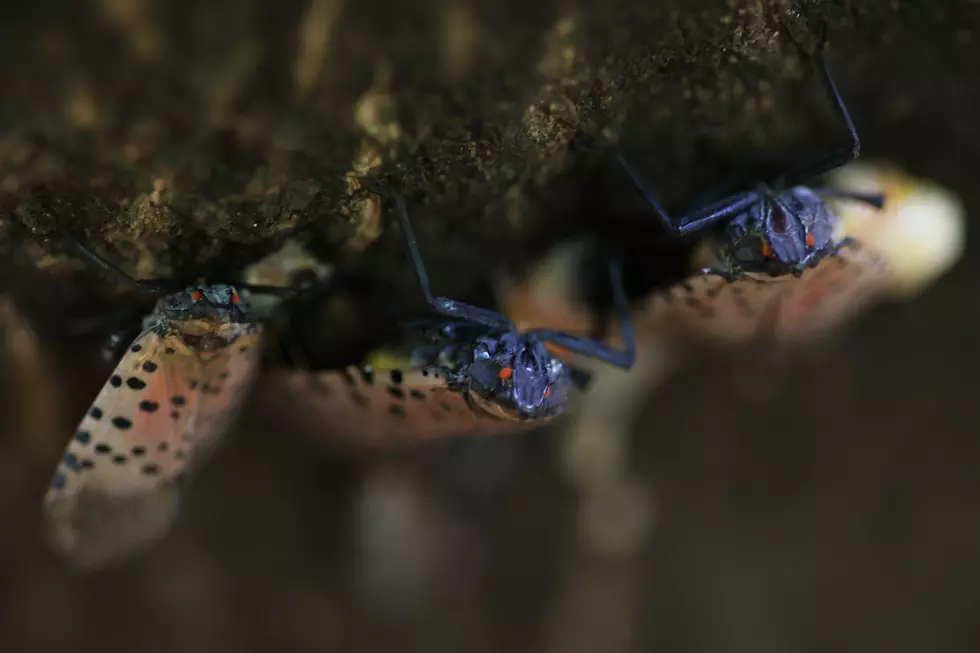
The young insects, known as instars, look very different from the adults.
Early-stage lanternflies are small, black, and covered with bright white spots. As they mature, they develop striking red coloring before eventually becoming the familiar adult with gray spotted wings and bright red underwings.
Read More: There's a New App for New Yorkers to Help Save Loons
Because they're in their early life stages right now, this is one of the best opportunities to slow their spread before they begin laying eggs later in the year.
What New Yorkers Can Do to Help
Experts recommend taking a few simple steps to help reduce the spread of spotted lanternflies:
- Learn to recognize the insect in all of its life stages, including egg masses.
- Check your vehicle, camper, trailer, outdoor furniture, and recreational equipment before traveling.
- Destroy any egg masses you find by scraping them into a plastic bag containing hand sanitizer or rubbing alcohol.
- Report suspected sightings to New York's invasive species reporting program if you believe you've found a new infestation.
It only takes one unnoticed egg mass to introduce spotted lanternflies into a new area.
With New York's apple orchards, vineyards, forests, and backyard trees all at risk, officials say public awareness remains one of the most effective tools for slowing the spread of this invasive pest.
What To Do With All Those Apples From Apple Picking
Gallery Credit: Unsplash/TSM
8 CNY Orchards to Pick Your Own Apples For Fall Fun
Gallery Credit: Credit - Polly McAdams
More From Lite 98.7